
Toxicology LDT Validation: LC-MS/MS Methods Under CLIA
Short answer: Most LC-MS/MS toxicology confirmation and quantitation methods are laboratory developed tests. Before reporting, the lab must establish the 42 CFR 493.1253(b)(2) characteristics plus mass spectrometry-specific ones: matrix effects and ion suppression, internal standard performance, carryover, isobaric interference, extraction recovery and stability. CLSI C62 is the main consensus guide.
Last reviewed: November 18, 2026. Primary sources: 42 CFR 493.1253, CLSI C62, CMS/CDC CLIA RFI (91 FR 43586) and peer-reviewed review of toxicology LDTs.
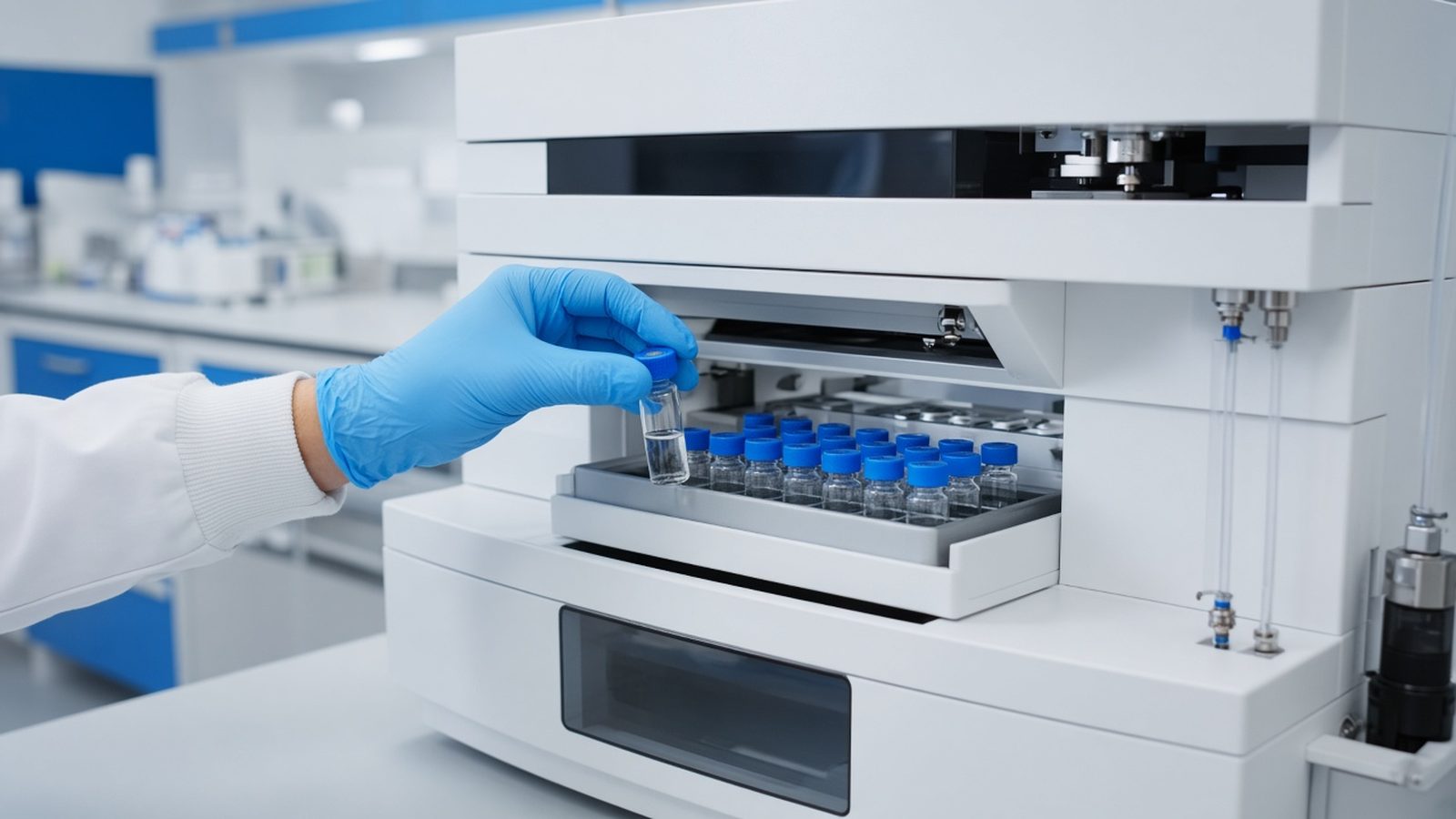
Why toxicology methods are often LDTs
Toxicology labs often build LC-MS/MS methods in house because drug menus change faster than FDA-cleared kits (review). CMS and CDC named toxicology in the 2026 CLIA RFI as a method with unique performance characteristics, listing examples such as stability studies, carry-over, internal standards and ionization (91 FR 43586). Immunoassay screens are frequently FDA-cleared, while confirmation and quantitation methods are commonly LDTs.
Validation parameters for LC-MS/MS LDTs
| Parameter | Why it matters | Rule / guide |
|---|---|---|
| Accuracy | Agreement with reference materials or a comparison method | 493.1253(b)(2)(i) |
| Precision | Within-run and between-run at cutoff and across range | 493.1253(b)(2)(ii) |
| LoD / LLOQ | Lowest reliable detection and quantitation | 493.1253(b)(2)(iii) |
| Selectivity and interference | Isobaric compounds, metabolites, co-medications | 493.1253(b)(2)(iv) |
| Reportable range / calibration model | Linearity, weighting, dilution integrity | 493.1253(b)(2)(v) |
| Matrix effects and ion suppression/enhancement | Different patient matrices change ionization | CLSI C62; ADLM |
| Internal standards | Track extraction and ionization; stable-isotope analogs where available | CMS RFI |
| Carryover | High samples contaminating the next injection | CMS RFI |
| Extraction recovery and hydrolysis | Efficiency of sample prep | ADLM |
| Stability | Specimen, processed sample and autosampler stability | Stability guide |
ADLM's 2026 comments also list chromatographic resolution, instrument drift and lot-to-lot reagent variability (ADLM). CLSI C62 (2nd ed., 2022) is the consensus guide for LC-MS method development and verification in clinical labs (CLSI).
Cutoffs, specimen types and reporting
- Set cutoffs from the clinical need and prove precision around them.
- Validate each specimen type separately: urine, oral fluid and blood behave differently.
- Define how results are reported (qualitative positive/negative vs quantitative) and the LDT report statement (LDT disclaimer).
- Plan data review rules for ion ratios, retention time and internal standard response (toxicology data review).
Building, validating or fixing an LDT? We help CLIA labs plan and document LDT development and validation and prepare for CLIA, CAP and New York State review.
PT and ongoing monitoring
Enroll in PT where it exists for your analytes; for analytes without PT, verify accuracy twice a year under 493.1236(c) (alternative assessment). Revalidate after column, mobile phase, extraction or instrument changes that could shift performance (revalidation).
Starting or expanding a toxicology lab
How Sound Lab Consultants helps
- Write LC-MS/MS validation plans with acceptance criteria for every parameter above.
- Review matrix effect, carryover and stability study designs and data.
- Set data review rules and report wording.
- Prepare for CLIA, CAP and NYS review of toxicology LDT files.
Talk through your test with an LDT regulatory consultant. Bring your intended use, platform and target launch date.
Frequently asked questions
Is an LC-MS/MS toxicology test an LDT?
Usually. Most LC-MS/MS confirmation and quantitation methods are developed in house by the lab that runs them, so CLIA requires full establishment of performance specifications under 42 CFR 493.1253(b)(2).
What extra parameters does a mass spectrometry LDT need?
Beyond CLIA's list, labs evaluate matrix effects and ion suppression or enhancement, internal standard performance, carryover, isobaric interference, extraction recovery, calibration model and stability.
What guideline covers LC-MS/MS validation in clinical labs?
CLSI C62, Liquid Chromatography-Mass Spectrometry Methods (2nd edition, 2022), is the main consensus guideline. CLIA's 42 CFR 493.1253 remains the legal requirement.
Did CMS mention toxicology in the 2026 CLIA RFI?
Yes. The July 16, 2026 RFI named toxicology and NGS as methods with unique performance characteristics, giving examples such as stability, carry-over, internal standards and ionization.
Do immunoassay drug screens count as LDTs?
Not if they are FDA-cleared and used as labeled; those are verified. Changing the specimen type, cutoff or procedure makes them modified tests that need establishment of performance specifications.
Sources
- 42 CFR 493.1253
- 42 CFR 493.1236
- CLSI C62 Liquid Chromatography-Mass Spectrometry Methods
- 91 FR 43586 CLIA RFI (July 16, 2026)
- ADLM response to CMS CLIA RFI (PDF)
- Bridging the gap: LDTs in clinical toxicology (PMC)
- Quantitative tandem mass spectrometry and LDT validation (PMC)
Sound Lab Consultants is an independent consulting firm. It is not affiliated with, endorsed by or acting for CMS, CDC, FDA, the College of American Pathologists, the New York State Department of Health or any accrediting organization or Medicare contractor. This page is general regulatory information, not legal advice. Confirm current requirements with the agency or accreditor that oversees your laboratory. Sound Lab Consultants, 25 Arizona Pl, Chandler, AZ 85225.