
How to Start a Toxicology Lab
To start a clinical toxicology lab, decide the test menu and complexity first, then build everything CLIA requires around it: a CLIA certificate (usually a Certificate of Compliance or Certificate of Accreditation for non-waived testing), a director and staff qualified for the complexity of every test, a written procedure for each method, performance verification or full validation before patient testing (42 CFR 493.1253), quality control, proficiency testing or alternative assessment, and records that survive a survey. Mass spectrometry methods built in-house are laboratory-developed tests and must be fully validated. Sound Lab Consultants works with toxicology startups on each of these steps.
Last reviewed: Oct 31, 2026
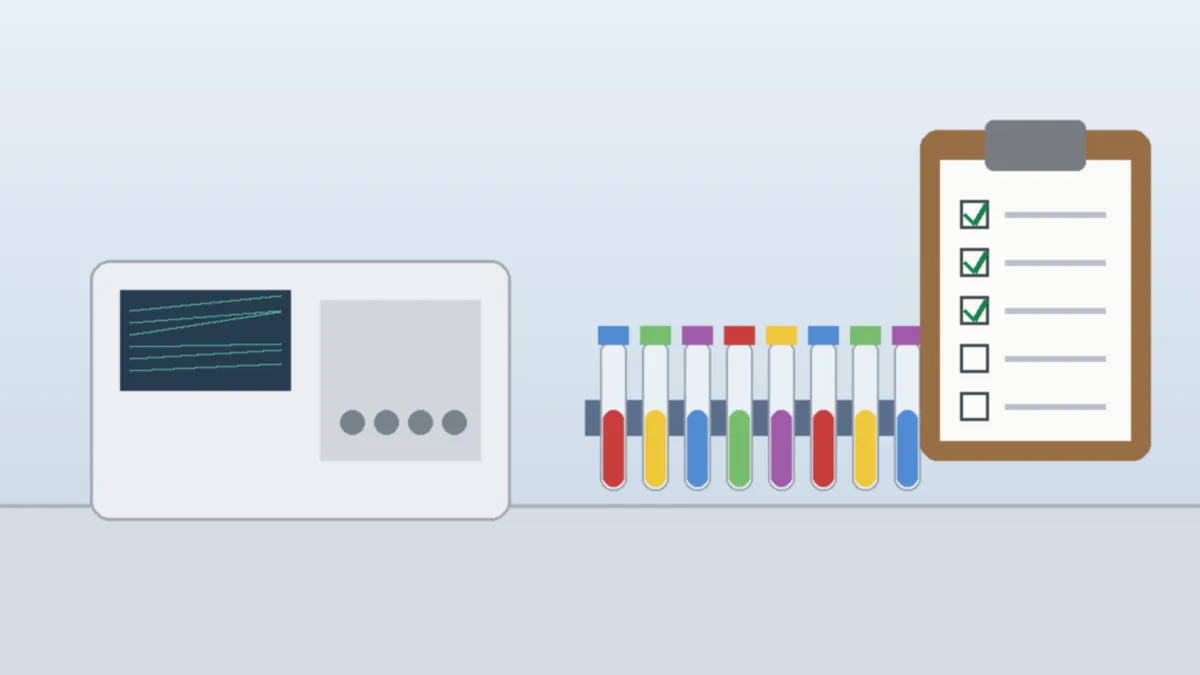
Step-by-step startup checklist
- Define the menu. List each analyte, specimen type (urine, oral fluid, blood), cutoff and method: FDA-cleared immunoassay screening, laboratory-developed LC-MS/MS or GC-MS confirmation, or both.
- Set complexity. Most chemistry analyzers running FDA-cleared drug immunoassays are moderate complexity; in-house mass spectrometry methods are high complexity. The highest-complexity test sets the personnel standard for the lab.
- Choose the certificate path. File CMS-116 for a Certificate of Compliance (state survey) or a Certificate of Accreditation (CAP, COLA or another approved accreditor). See the CMS-116 guide.
- Qualify personnel. Confirm the director, technical supervisor, general supervisor and testing personnel meet 42 CFR Part 493 Subpart M for high-complexity testing. See CLIA personnel qualifications.
- Check controlled-substance handling. Reference standards and controls may contain scheduled drugs. Confirm with DEA whether an analytical laboratory registration (DEA Form 225) is needed for the materials you will stock.
- Plan workflow and space for compliance. Separate specimen receipt, aliquoting, extraction and instrument areas so that chain of custody, carryover and contamination controls can be documented (42 CFR 493.1101).
- Write procedures before validation. Every method needs an approved procedure covering the items in 42 CFR 493.1251, including cutoffs, ion ratio and retention time acceptance rules and reporting rules.
- Validate or verify. Verify FDA-cleared immunoassays; fully establish performance for each LC-MS/MS analyte (details below).
- Set QC, calibration and PT. Define calibrators, control levels near cutoffs, calibration verification and PT enrollment or alternative assessment for unregulated analytes.
- Build requisitions and reports. Make sure requisition fields and report content meet 42 CFR 493.1241 and 493.1291. See test requisition and report requirements.
Screening vs confirmation: what CLIA expects for each
| Item | FDA-cleared immunoassay (unmodified) | Laboratory-developed LC-MS/MS or GC-MS |
|---|---|---|
| Performance work before patient testing | Verify accuracy, precision, reportable range and reference intervals (493.1253(b)(1)) | Establish accuracy, precision, analytical sensitivity, analytical specificity including interferences, reportable range, reference intervals and any other needed characteristic (493.1253(b)(2)) |
| Typical complexity | Moderate (check the FDA categorization for the specific test system) | High |
| Calibration | Follow manufacturer instructions; calibration verification per 493.1255 | Lab-defined calibration curve and acceptance criteria; calibration verification per 493.1255 |
| Controls | At least the 493.1256 minimums or an approved IQCP | Lab-defined controls that challenge each analyte, usually around the cutoff |
| Procedure manual | Manufacturer package insert may be used as part of the procedure, with lab-specific additions | Fully written by the lab |
LC-MS/MS validation checklist
- Accuracy against certified reference material, spiked samples or split samples with another laboratory.
- Within-run and between-run precision at low, cutoff and high concentrations.
- Lower limit of quantitation or detection and the cutoff you will report against.
- Analytical specificity: isobaric compounds, metabolites, common co-medications and matrix interferences.
- Matrix effects (ion suppression or enhancement) and internal standard performance.
- Carryover after high specimens and the rule for re-injection.
- Reportable range and dilution integrity.
- Specimen stability at the storage conditions you will actually use.
- Acceptance rules for retention time, ion ratio and internal standard recovery written into the procedure.
- A signed validation summary approved by the laboratory director before patient reporting (42 CFR 493.1445).
Common survey problems in new toxicology labs
- Mass spectrometry methods reported as if they were verified kits, with no evidence of analytical specificity or interference studies.
- Validation completed but procedure manual not approved, signed and dated by the director before use.
- Personnel files that do not show high-complexity qualifications for staff performing or reviewing LC-MS/MS work.
- No documented review of controls and calibrators before results are released.
- Unregulated analytes with no PT or twice-yearly alternative performance assessment.
- Reports that omit the testing lab's address, units, cutoffs or the specimen type.
- Carryover or contamination events with no corrective action record (42 CFR 493.1282).
Records to keep
- CLIA certificate, accreditation documents and CMS-116 copies.
- Personnel qualification evidence, training and competency assessments.
- Validation and verification data, summaries and director approvals.
- Approved procedure manual, with discontinued procedures kept as 42 CFR 493.1105 requires.
- QC, calibration, calibration verification and maintenance records.
- PT results and alternative assessment records, with reviews and corrective actions.
- Test requisitions, test records and reports kept for the 493.1105 retention periods.
- Any DEA registration, inventory and disposal records that apply to your reference materials.
How Sound Lab Consultants works with toxicology startups
We work with new toxicology labs on certificate strategy, personnel file review, procedure writing, validation plans and acceptance criteria, data review procedures and survey preparation. Related guides: how to start a clinical laboratory, LDT validation, toxicology lab data review and toxicology lab billing.
Frequently asked questions
Is a toxicology lab using LC-MS/MS high complexity under CLIA?
A mass spectrometry method developed by the laboratory is not FDA-cleared, so it is a high-complexity test and needs full establishment of performance specifications under 42 CFR 493.1253(b)(2). Source: 42 CFR 493.1253 Establishment and verification of performance specifications (eCFR), CMS State Operations Manual Appendix C (PDF).
What performance specifications must a lab-developed toxicology method establish?
Accuracy, precision, analytical sensitivity, analytical specificity including interfering substances, reportable range, reference intervals and any other characteristic required for test performance. Source: 42 CFR 493.1253 Establishment and verification of performance specifications (eCFR).
Does a toxicology lab need a DEA registration?
It depends on the controlled substances the lab stocks. DEA lists analytical laboratory registration under Form 225; confirm with DEA for your reference materials. Source: DEA Diversion Control Division - Registration, 21 CFR 1301.13 DEA registration by business activity (eCFR).
Which CLIA certificate does a new toxicology lab need?
Non-waived labs need a Certificate of Compliance or a Certificate of Accreditation, applied for with CMS-116. Source: CMS - Clinical Laboratory Improvement Amendments (CLIA), 42 CFR Part 493 (eCFR).
How long must toxicology test records be kept?
Most CLIA records, including test requisitions, test records and reports, must be kept at least two years under 42 CFR 493.1105. Source: 42 CFR 493.1105 Retention requirements (eCFR).
Sources
- 42 CFR Part 493 (eCFR)
- 42 CFR 493.1101 Facilities (eCFR)
- 42 CFR 493.1105 Retention requirements (eCFR)
- 42 CFR 493.1251 Procedure manual (eCFR)
- 42 CFR 493.1253 Establishment and verification of performance specifications (eCFR)
- 42 CFR 493.1255 Calibration and calibration verification (eCFR)
- 42 CFR 493.1256 Control procedures (eCFR)
- 42 CFR 493.1282 Corrective actions (eCFR)
- 42 CFR 493.1445 Laboratory director responsibilities (eCFR)
- CMS State Operations Manual Appendix C (PDF)
- CMS - Clinical Laboratory Improvement Amendments (CLIA)
- DEA Diversion Control Division - Registration
- 21 CFR 1301.13 DEA registration by business activity (eCFR)
- CAP Laboratory Accreditation Program
- COLA