
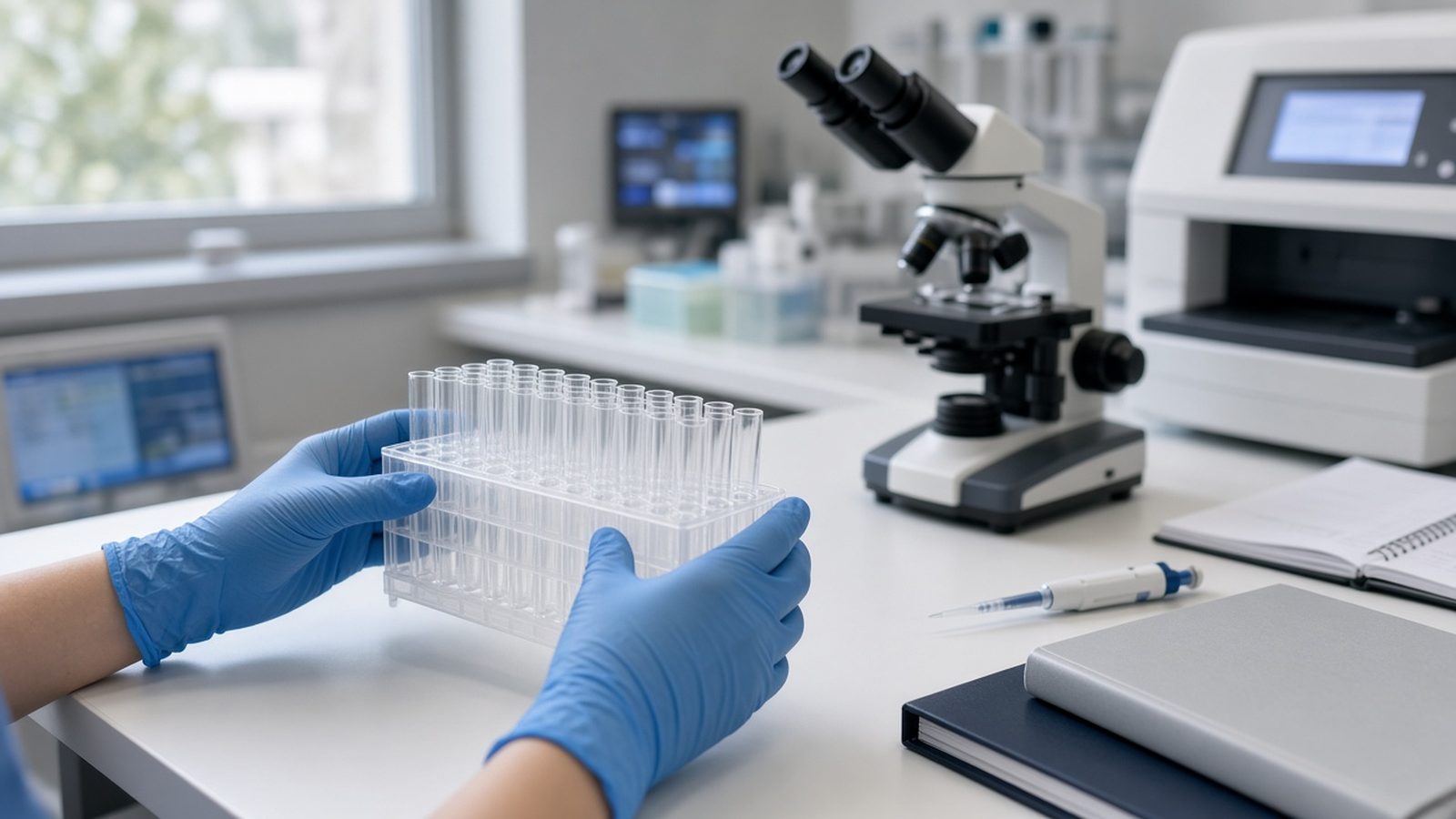
New Jersey Lab Survey Preparation: CLIA, COLA, CAP and CLIS
Short answer: New Jersey laboratory survey preparation covers federal CLIA requirements and, when the laboratory is accredited, COLA or CAP standards, plus the separate Clinical Laboratory Licensing Program license at each location. Sound Lab Consultants helps organize records, run mock inspections and prepare deficiency responses statewide, remotely and on-site, and does not maintain a New Jersey office.
Last reviewed: November 16, 2026. Primary sources: NJ DOH Clinical Laboratory Licensing Program; N.J.S.A. 45:9-42.28; N.J.A.C. 8:45-1.2; 42 CFR Part 493; CMS SOM Appendix C; COLA survey preparation PDF; CAP laboratory accreditation.
Survey preparation is a dual file in New Jersey
A New Jersey laboratory preparing for a survey has two systems to keep straight. Federal CLIA inspections, and the accreditation surveys that can stand in for a routine CLIA survey, follow 42 CFR Part 493 and the applicable accreditation standards. The New Jersey Clinical Laboratory Licensing Program issues a separate annual license, may inspect licensed laboratories and collection stations, and may formally recognize a CMS-approved accreditation organization’s routine survey when it finds those standards equivalent, while retaining authority to conduct complaint inspections (N.J.S.A. 45:9-42.37 in the official Act compilation).
Accreditation does not renew the CLIS license. A successful COLA or CAP survey does not move the November 1 renewal date. A current state license does not replace CLIA quality systems, proficiency testing or personnel competency. Sound Lab Consultants helps laboratories prepare both files, run a mock inspection, and respond to cited deficiencies. We do not conduct official surveys or act for CMS, COLA, the College of American Pathologists, The Joint Commission or the New Jersey Department of Health. We serve laboratories statewide, remotely and on-site, from 25 Arizona Pl, Chandler, AZ 85225, with no New Jersey office.
What a CLIA survey looks at
The CMS CLIA program and the State Operations Manual, Appendix C describe how surveyors evaluate laboratories. In practice, a surveyor compares the certificate and test menu with the work being performed, then traces personnel qualifications and competency, quality control, proficiency testing, procedure manuals and patient-test management from order to report. Subpart Q of 42 CFR Part 493 is the inspection framework; Subparts H, J, K and M supply most of the standards the surveyor is applying.
Non-waived testing personnel competency has to cover six procedures: direct observation of routine test performance; monitoring the recording and reporting of results; review of worksheets, quality-control records, proficiency testing results and preventive-maintenance records; direct observation of instrument maintenance and function checks; assessment of test performance with previously analyzed specimens, internal blinded samples or external proficiency testing samples; and assessment of problem-solving skills. Competency is assessed at six months during the first year the person tests, and at least annually after that. Training records are not a substitute for competency records.
Preparing for a COLA survey
Laboratories accredited by COLA are surveyed against COLA’s standards. COLA’s public Preparing for your COLA Survey guide (January 2022) tells laboratories to have documents covering the previous two years, or the period since the last CMS CLIA inspection if that period is shorter. The guide’s document list includes the CLIA certificate, the annual test volume form, personnel files (education, licenses, job descriptions, training and competency), director-approved policy manuals and package inserts, proficiency testing and corrective action, quality control, calibration, maintenance and function checks, temperature and humidity logs, and the laboratory’s incident-management and quality-assessment plans. It also describes a typical small-laboratory on-site survey as lasting several hours, with operations continuing during the visit. Confirm the current document list and schedule with COLA; this page summarizes a public guide, it is not a COLA instruction.
Preparing for a CAP inspection
Laboratories accredited by the College of American Pathologists are inspected against the CAP checklists that apply to their activity menu. Preparation typically includes reviewing the current checklists and the changes-only document, confirming that the activity menu matches the tests actually performed, auditing personnel and competency files, reviewing quality-control and equipment records, and completing the required interim self-inspection. A mock inspection can follow a specimen from collection to report and can include staff interviews in the same style a peer inspector uses. CAP accreditation, like COLA accreditation, can support a CLIA Certificate of Accreditation; it still does not replace the New Jersey license.
The document set to have in one place
| Area | What to have available | Why it matters |
|---|---|---|
| Administrative file | Current CLIA certificate, New Jersey clinical laboratory or collection-station license, CMS-116 and CMS-209 information, fee receipts, test menu, prior CMS-2567 or plan of correction, and ownership or director-change notices | Surveyors confirm the certificate and state license match the work actually performed at that address (N.J.S.A. 45:9-42.28; SOM Appendix C). |
| Personnel and competency | Diplomas or transcripts, licenses, job descriptions, training records, and competency assessments that cover the six CLIA procedures for non-waived testing personnel (direct observation of test performance, monitoring recording and reporting, review of worksheets, direct observation of instrument maintenance, test performance with previously tested specimens, and problem-solving evaluation) | Competency is assessed at six months in the first year and at least annually thereafter under Subpart M of 42 CFR Part 493. |
| Quality control and equipment | At least two years of QC, calibration and calibration verification, temperature and humidity logs, maintenance and function checks, reagent lot records and package inserts | Subpart K quality-system requirements; COLA’s survey-preparation guide asks laboratories to have two years of records, or records since the last CMS CLIA inspection if that period is shorter (COLA, Preparing for your COLA Survey). |
| Proficiency testing | Enrollment in a CMS-approved program for regulated analytes, event scores, director review, and documented corrective action when a score falls below the program’s passing criteria | Subpart H of 42 CFR Part 493. Initial New Jersey licensure also asks for PT documentation for each non-waived test on the CL-3. |
| Procedures and reports | Current, director-approved procedure manuals for pre-analytic, analytic and post-analytic steps; package inserts; specimen-rejection rules; critical-result and corrected-report procedures | Surveyors trace a specimen from order to report and compare the written procedure with what staff actually do. |
| State license calendar | The current CLIS license, the November 1 renewal filing, and any 14-day ownership or director-change notice | A current CLIA or accreditation survey does not renew the New Jersey license. Licenses expire December 31, with renewal due November 1 (N.J.A.C. 8:45-1.2). |
Mock inspections
A mock inspection is a structured practice review. It is useful several weeks or months before a scheduled accreditation survey, after a major menu or instrument change, or after a prior deficiency report. The work usually includes a document audit, observation of testing and specimen handling, interviews with testing personnel, and a written list of gaps with assigned owners. It is not an official survey, and completing one does not guarantee the outcome of a later official survey.
In New Jersey, the mock inspection should also include the state license file: the current license posted on the premises, the November 1 renewal status, director credentials and the three-laboratory cap, and any 14-day ownership or director-change notice required by N.J.S.A. 45:9-42.32. Those items are easy to leave out of a binder that was built only around a COLA or CAP checklist.
Where this work is done
Survey preparation is statewide. Regional guides apply the same document set to local laboratory patterns:
- South New Jersey, including Camden County and Cherry Hill and Atlantic City and Cape May
- Monmouth and Ocean Counties
- North and Central New Jersey, including Newark, Essex and Hudson, Bergen County and Hackensack and Trenton, Mercer and Princeton
Start with the New Jersey Lab Consultant if you also need a license or director map, or with the CLIS license guide if the filing itself is the open item.
Preparing for a CLIA, COLA or CAP survey in New Jersey?
How Sound Lab Consultants helps
- Audit the administrative, personnel, quality-control, proficiency testing and procedure files a surveyor is likely to request
- Run a mock inspection and document gaps without treating the exercise as an official survey
- Help draft responses to cited deficiencies
- Coordinate the survey calendar with the November 1 CLIS renewal and with director or ownership-change notices
- Keep CLIA, COLA or CAP work aligned with the New Jersey license at each location
Talk through your New Jersey survey file with a clinical lab consultant.
Frequently asked questions
What does CLIA, COLA or CAP survey preparation include for a New Jersey laboratory?
It includes a gap review of the administrative file, personnel and competency records, quality control, proficiency testing, procedure manuals and prior deficiency responses against 42 CFR Part 493 and, if the laboratory is accredited, the current COLA or CAP standards. In New Jersey it also includes confirming that each location’s Clinical Laboratory Licensing Program license, director credential and November 1 renewal are current. A consultant can run a mock inspection and help draft a response to cited deficiencies. The consultant does not replace the official survey or the laboratory director.
Does a COLA or CAP accreditation survey replace the New Jersey state license inspection?
Not automatically. New Jersey may recognize a CMS-approved accreditation organization’s routine survey when it finds those standards equivalent, but the Department retains authority to conduct complaint inspections (N.J.S.A. 45:9-42.37). Accreditation also does not renew or replace the annual CLIS license.
How is a mock inspection different from the official survey?
A mock inspection is a practice review against the same kinds of records and observations a surveyor uses. It is a consulting activity. It is not an official CLIA, COLA, CAP, Joint Commission or New Jersey Department of Health survey, and it does not guarantee the outcome of a later official survey.
What records should we keep for a COLA survey?
COLA’s January 2022 preparation guide tells laboratories to have documents covering the previous two years, or the period since the last CMS CLIA inspection if that is shorter, including the CLIA certificate, the annual test volume form, personnel files, policy manuals, package inserts, proficiency testing, quality control, maintenance, temperature logs and the laboratory’s quality assessment plan. Confirm the current document list with COLA before a scheduled survey.
Does Sound Lab Consultants have an office in New Jersey?
No. Sound Lab Consultants is headquartered at 25 Arizona Pl, Chandler, AZ 85225 and serves New Jersey laboratories remotely and through scheduled on-site work. It does not maintain a New Jersey office.
When is the New Jersey laboratory license renewal due?
The license expires on December 31. Under N.J.A.C. 8:45-1.2, the Department provides renewal applications by October 1, and the completed application and fee are due by November 1. A $100 late fee applies if the renewal is submitted after December 31 (N.J.A.C. 8:45-1.3(b)). For 2027 licenses, NJ DOH directed renewals through the myNJ / ALiS portal.
Sources
- NJ DOH Clinical Laboratory Licensing Program
- New Jersey Clinical Laboratory Improvement Act (official compilation PDF)
- N.J.S.A. 45:9-42.28 — License; necessity; categories
- N.J.S.A. 45:9-42.27 — Definitions
- N.J.S.A. 45:9-42.30 — Annual issuance, expiration and display
- N.J.S.A. 45:9-42.32 — Transfer prohibited; change in ownership or direction
- N.J.S.A. 45:9-42.33 — Provisions not applicable
- P.L.2016, c.86 (point-of-care laboratory testing amendments)
- N.J.A.C. 8:44-2.2 — Applicability of regulations
- N.J.A.C. 8:44-2.3 — Laboratory director
- N.J.A.C. 8:45-1.2 — Annual renewal of licensure
- N.J.A.C. 8:45-1.3 — Licensure fees
- CL-3 instructions (NJ DOH)
- CL-3 application, including fee worksheet (NJ DOH)
- NJ DOH Public Health and Environmental Laboratories payment page
- 2027 Clinical Laboratory & Collection Station license renewal letter (Sept. 8, 2026)
- New Jersey State Board of Medical Examiners
- N.J.A.C. 13:35-3.6 — Bioanalytical laboratory director license for physicians
- 42 CFR Part 493 (eCFR)
- 42 CFR 493.1445 — Laboratory director responsibilities
- CMS: Clinical Laboratory Improvement Amendments (CLIA)
- CMS State Operations Manual, Appendix C — Survey Procedures and Interpretive Guidelines for Laboratories
- COLA: Preparing for your COLA Survey (January 2022 PDF)
- College of American Pathologists: Laboratory accreditation
Sound Lab Consultants is an independent consulting firm. It is not affiliated with, endorsed by or acting for the New Jersey Department of Health, the New Jersey State Board of Medical Examiners, CMS, CDC, FDA, the College of American Pathologists, COLA, The Joint Commission or any other government agency or accrediting organization. This page is general regulatory information, not legal advice. Confirm current requirements with the agency that oversees your laboratory. Sound Lab Consultants, 25 Arizona Pl, Chandler, AZ 85225.